
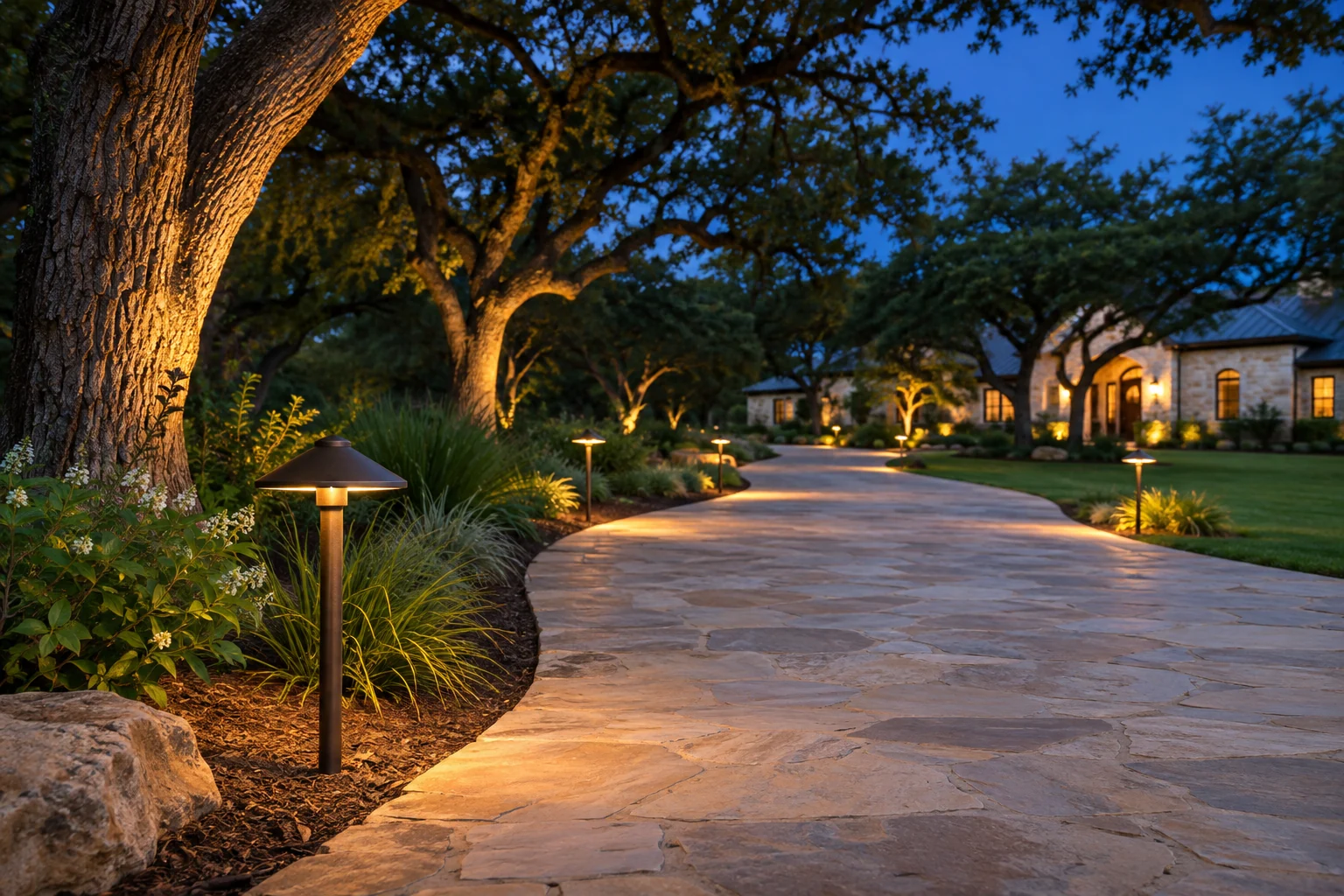
Your landscape does not disappear when the sun goes down. The front walk still welcomes visitors, the patio still holds a place to unwind, and the trees and planting beds still shape the view from your windows. Thoughtful landscape lighting helps those spaces feel intentional after dark. Irri-Tex LLC offers landscape lighting in Tyler and East Texas. Start with a conversation about how you use your property, which areas you want to illuminate, and the atmosphere you would like to create. A useful lighting plan begins with those priorities rather than a predetermined number of fixtures.
Start with the way you use your outdoor space
Walk through your property in the evening and consider the places that matter most. You may want a clearer route from the driveway to the front door, a comfortable view across the patio, or a subtle accent near a favorite planting bed. These are different goals. Describing them separately helps establish a sensible order of work and gives the design a purpose beyond simply making the yard brighter.
Look from inside the house as well as from outside. A fixture that looks unobtrusive beside a path might shine directly toward a living room window. A garden feature that is easy to see from the driveway may be hidden from the porch. Tell Irri-Tex which viewpoints you enjoy and which spaces should remain quiet. That information helps frame a lighting conversation around the experience of living on the property.
Pathway and entry lighting with a clear purpose
A front walk, side passage, or transition between outdoor spaces is a natural place to begin planning. Discuss the route people actually take, the edges they need to recognize, and any changes in level along the way. The aim is to make the route easier to understand while keeping the view comfortable. The fixture itself does not need to become the most noticeable part of the scene.
Consider how the area works during the day, too. Fixtures should be discussed in relation to mowing, edging, foot traffic, and the way beds are maintained. A narrow planting strip beside a busy walkway presents different placement questions from a broad landscaped entrance. Bring those practical details into the initial conversation so the proposed arrangement supports everyday use as well as the evening appearance. Lighting complements good property maintenance; it does not replace attention to uneven surfaces or other physical hazards.
Garden accents that give the view a focal point
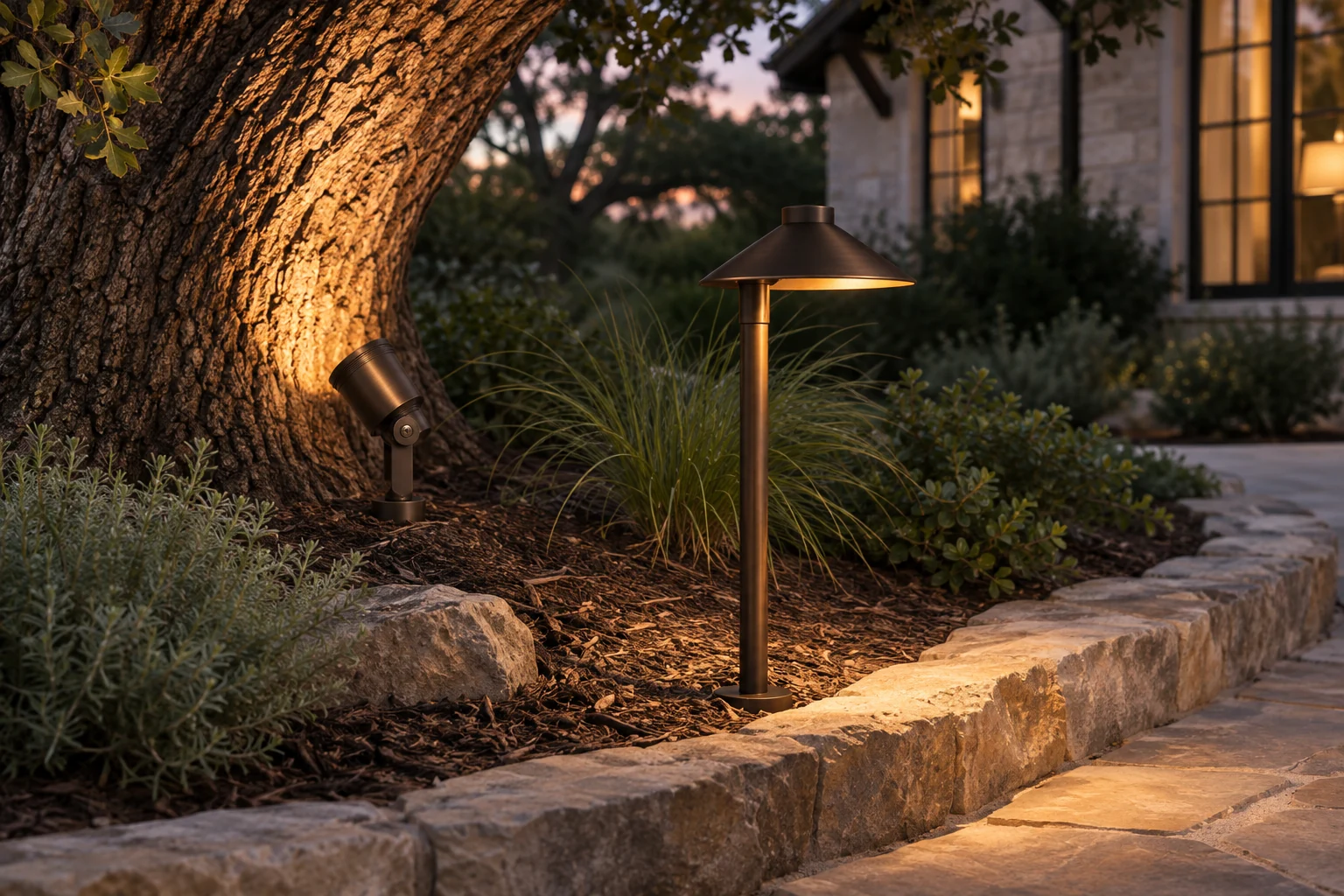
A distinctive tree, a textured garden wall, or a carefully planted bed may deserve attention after dark. Decide which features matter most before trying to illuminate every part of the yard. A clear focal point can help the overall scene feel organized, while leaving some surrounding areas darker creates contrast. Share photographs of the features you want to emphasize, along with views from the places where you usually sit or enter the property.
Plants change with the seasons and continue growing after a lighting project is completed. A fixture position that works beside a young shrub may need attention as the planting fills out. Discuss access for later adjustments and the relationship between lights, roots, mulch, and routine landscape work. If you are planning new plants or other yard improvements, mention those plans early so the lighting layout can be considered alongside them.
Outdoor living areas should feel comfortable
A patio used for quiet evenings has different priorities from an area used for serving food or welcoming a group of guests. Describe the activities you want the space to support and where people tend to gather. Seating arrangements, doors, nearby planting beds, and existing porch lights all contribute to the view. Planning around those details is more useful than selecting fixtures from a photograph without considering how the space is used.
Think about what you would like to see beyond the edge of the patio as well. A small amount of attention to a nearby feature can connect the seating area with the rest of the landscape. At the same time, brightness should remain comfortable for people facing different directions. Bring examples of the mood you prefer, then discuss how a similar feeling could translate to your own property rather than expecting an exact copy of another home's design.
Keep light focused, comfortable, and controlled
Responsible outdoor lighting has a defined purpose and puts illumination where it is useful. Shielding, careful aiming, restrained brightness, warmer light, and appropriate operating times can help limit glare and unwanted spill. Discuss nearby windows and neighboring properties when considering fixture locations. A successful conversation should include where light should not go as well as the areas you want to see.
Existing exterior lights are part of that discussion. A bright porch fixture can change how nearby landscape accents appear, and mismatched light colors may make an otherwise coordinated space feel disconnected. Share what you already have and what you would prefer to retain. Ask how the proposed lighting will work with those features, and whether an evening review would help evaluate the result from the viewpoints that matter to you.
Plan equipment and controls around the project
Before choosing equipment, discuss the proposed lighting areas, the available power arrangement, and how you want the system to operate. Different projects call for different combinations of fixtures and controls. Ask which components are included in the proposed scope, what makes them suitable for the location, and how you will adjust the operating schedule. Brand selection, control features, and compatibility should be confirmed for your actual project rather than assumed from a general service description.
Any electrical work should be evaluated by an appropriately qualified professional. This page is a planning guide, not a wiring guide. Tell Irri-Tex about existing outdoor outlets, previous lighting work, and any known equipment problems without opening electrical enclosures yourself. If another trade or additional work is needed, clarify that responsibility before proceeding. An understandable proposal should distinguish the lighting installation from related work outside its scope.
Coordinate lighting with irrigation and drainage
Outdoor systems often share the same landscape. Sprinkler heads, valve boxes, drain inlets, lighting fixtures, and planting beds all need to fit into the available space. Mention existing irrigation and drainage equipment when discussing the lighting layout. A photograph of the yard in daylight can help explain where these features are located, especially when some components sit below plant growth or are difficult to identify at first glance.
If you are planning irrigation repairs, drainage work, or a new landscape layout, bring those projects into the conversation before the lighting scope is finalized. Sequencing the work thoughtfully can make access and placement easier to discuss. Irri-Tex also offers sprinkler and drainage services, so you can ask how the separate scopes relate to your property. Do not assume that every improvement is included in one quote; confirm the details of each service.
Make your landscape lighting consultation useful
Prepare a short list of your priorities, a few photographs, and your general location. Identify the areas you want to enjoy after dark and any concerns about existing lights. If you have a preferred budget or want to approach the project in stages, say so at the beginning. Ask what is included in the proposed work, how changes will be handled, and what information you will receive about operating and caring for the selected equipment.
For landscape lighting in Tyler and East Texas, contact Irri-Tex LLC at 903-752-4861. You can call directly or use the project message builder to prepare a text for your own messaging app. Describe the space, the effect you would like to create, and whether lighting already exists. Those details provide a practical starting point for discussing availability, evaluating the property, and deciding on the next step.
Landscape Lighting: your questions answered
Can I start with one part of the yard?
Ask about a scope focused on your highest-priority area, such as the front walk or patio. If you may expand later, discuss that intention before equipment is selected. Future changes depend on the layout and the components chosen for the project.
Should every tree and planting bed have a light?
Not necessarily. Start by identifying the features you value most and the views you want to enjoy. A selective layout can give the space a clear focal point. The appropriate amount of lighting depends on your goals and the conditions on your property.
Can you look at an existing lighting setup?
Describe the equipment you have and what you would like to change when you contact Irri-Tex. Photos and model information can help establish the conversation. Confirm whether the proposed evaluation, repair, or upgrade is within the available service scope before scheduling work.
How much does landscape lighting cost?
A meaningful estimate depends on the areas included, site access, equipment selection, available power, controls, and any related work. Request a property-specific proposal that explains what is included. This website does not publish a fixed package price or promise a particular project cost.
Can landscape lighting make my driveway easier to see at night?
Discuss the route, edges, entry points, and surrounding landscape you want to illuminate. The plan should consider vehicle clearance, glare, nearby windows, and existing exterior lights. Photographs of the driveway and the views you use most help explain your priorities.
Can I light trees and pathways with different fixtures?
Different features can call for different lighting approaches. Describe which trees, paths, and garden details matter to you, then ask about fixture selection and placement. The goal is a coordinated evening view with light directed where it is useful.
Let’s talk about your property.
Contact Irri-Tex LLC at 903-752-4861 to discuss landscape lighting in Tyler and East Texas. Share your location, what you’re seeing, and what you’d like to accomplish.
Start a project conversation