
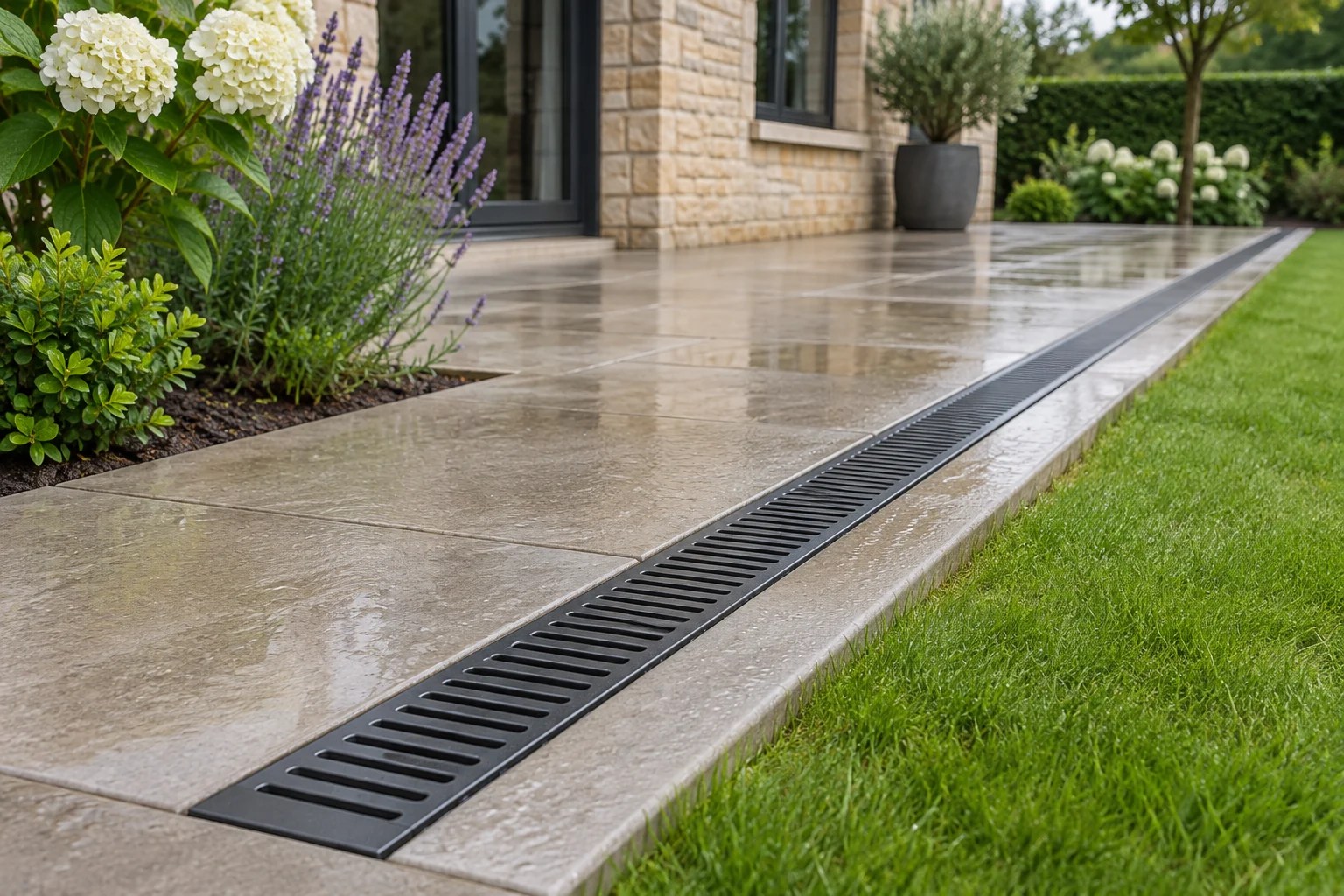
Water moving across the ground needs a clear path. When it settles in a low lawn area, crosses a walkway, or gathers beside a patio, surface drainage can be one part of the answer. Irri-Tex LLC offers surface drain installation in Tyler and East Texas. A useful plan considers where runoff collects, how quickly it arrives, and where it can be discharged appropriately, while keeping the finished space practical for everyday use.
Collect runoff where it actually gathers
A surface drain receives water through an opening at ground level. Depending on the location and design, that opening may be a grated inlet at a low point or a longer collection feature beside a paved area. The drain connects to a route that carries water toward a suitable discharge location. Its position is critical because water must be able to reach the opening.
During an assessment, discuss the path runoff takes before it reaches the puddle. A lawn depression, the edge of a driveway, and a patio corner can each call for a different collection arrangement. Installing a grate where it looks convenient may leave the actual low point untouched. The proposed inlet locations should follow the way the property directs water.
Understand what a surface drain can address
Surface drainage is generally discussed when water is visible above ground and needs a collection point. Homeowners may notice recurring puddles, runoff crossing a route to the backyard, or water collecting where hardscape meets lawn. The right approach depends on the contributing area and the conditions at the outlet. A system should be sized and laid out for the specific concern being evaluated.
Persistent saturated soil without visible runoff may require a different investigation. Similarly, water from a leaking irrigation component should be addressed at its source. Explain whether the problem occurs after rain, after scheduled watering, or at unrelated times. That distinction helps separate surface collection needs from other issues and avoids choosing a drain before the cause is understood.
Consider inlet placement, grade, and the surrounding finish
Water follows the available slope. If the surrounding ground directs runoff away from a drain, the opening cannot collect it effectively. The relationship between the inlet elevation and the adjacent lawn or paving is therefore an important part of installation. Small surface details, such as edging or raised mulch, can also interrupt the intended path.
Talk through the final appearance and use of the area. A grate near a walkway should suit its location and expected use. A lawn inlet should remain identifiable for maintenance. If surface adjustments are proposed, ask which areas will change and how those changes affect nearby features. Drainage planning should consider the complete approach to the inlet, not simply the box or pipe below it.
Plan the underground route and outlet
The visible drain is only one component. The pipe route, connections, available fall, and outlet all influence the system. A straightforward-looking puddle may require a longer route to reach an appropriate discharge point. Existing utilities, irrigation lines, tree roots, and hard surfaces can affect that route and the work needed to install it.
Ask where the collected water will go and how the destination was selected. Water should not be sent toward a neighboring property or connected to an unverified public drain. The receiving area also needs to be considered when it is already wet. A proposal that identifies the outlet and explains its limitations is more informative than one that describes only the number of inlets to be installed.
Coordinate drainage with patios and other outdoor projects
A new patio, walkway, landscape border, or driveway extension can change how runoff moves. If you are planning another outdoor improvement, discuss drainage before the final surfaces are installed. Coordinating the sequence can make it easier to consider collection locations, pipe crossings, maintenance access, and the appearance of the finished area.
For existing spaces, identify the features you want to preserve. Access for excavation, protection of nearby landscaping, and restoration of disturbed surfaces should be included in the conversation. Ask whether work on paving or other features is included in the proposed scope or requires separate arrangements. Clear decisions before installation help prevent an attractive improvement from accidentally obstructing the path water needs to follow.
Keep leaves, grass, and sediment in mind
Surface drains are exposed to the materials that move across a yard. Leaves can cover a grate, grass clippings can accumulate around an inlet, and soil can wash toward a collection point. Even a well-positioned drain needs an open entrance. A location beneath trees or beside a mulched bed may require more frequent observation than an inlet in a clear area.
Ask how the selected components can be accessed for cleaning and what maintenance the design calls for. Keep the inlet visible and avoid covering it with new soil or decorative material. Observe the outlet as well as the collection point. If the grate is clear but water is still not moving as expected, report the symptoms so the entire route can be evaluated.
Review a scope that explains the complete project
Before approving surface drain installation, review the collection areas, inlet types, approximate routes, discharge location, and restoration expectations. Ask what site conditions could change the scope once work begins. If an existing drain is being extended or replaced, discuss how its condition will be evaluated and whether the old route remains suitable.
It is also useful to understand the intended outcome in ordinary language. Which puddle or runoff path is the project meant to address? What rainfall or downstream conditions could still cause temporary ponding? What will you need to maintain? These questions make the proposal easier to assess and help keep expectations tied to the design. A drain should never be sold as a guarantee against every possible flood.
Arrange the next step for your Tyler property
You can prepare for an initial conversation with a few straightforward observations. Note the affected area, the approximate time water remains, and the direction it appears to travel. Photos from a safe location during and after rain can help show conditions that are no longer visible on a dry day. Mention recent construction or landscape changes and any known drainage pipes already on the property.
For surface drain installation in Tyler or an East Texas drainage project, call Irri-Tex LLC at (903) 752-4861. Ask about availability for your location and describe the outdoor space you want to improve. The next step is to connect those observations with a suitable collection and discharge plan, including a clear explanation of the work, its limits, and ongoing care.
Surface Drains: your questions answered
What is the difference between a surface drain and a French drain?
A surface drain collects runoff through a visible opening at ground level. A French drain collects water along an aggregate-filled trench, commonly with a perforated pipe. The appropriate choice depends on where the water is moving and how it reaches the system.
Can a surface drain be added beside an existing patio?
It may be possible, but the patio elevations, available collection location, pipe route, and outlet need assessment. Access and restoration also matter. A site-specific discussion is needed before selecting the drain or determining the scope.
Why does water collect even when a drain is already installed?
Possible causes include a covered inlet, a blocked route, an unsuitable inlet elevation, outlet restrictions, or runoff beyond the system's intended capacity. Those are possibilities, not a diagnosis. Describe when the problem occurs and have the existing layout evaluated.
Will I need to clean a surface drain?
Routine attention is part of ownership. Keep leaves and other debris from covering accessible openings, and follow the maintenance guidance for the installed components. Ask how to recognize a problem that needs professional evaluation rather than attempting work on unfamiliar buried connections.
Can a channel drain help with water along a patio?
A channel drain is one option to discuss when runoff crosses or collects beside a hard surface. Placement, surface levels, and the discharge route must work together. Share photographs of the area during rain and describe where you want the water problem addressed.
Should I choose a catch basin or a channel drain?
The collection pattern helps guide that choice. A catch basin collects water at an inlet, while a channel drain collects along a longer opening. Ask which approach suits the affected surface, how it connects to the outlet, and how cleaning access will be maintained.
Let’s talk about your property.
Contact Irri-Tex LLC at 903-752-4861 to discuss surface drains in Tyler and East Texas. Share your location, what you’re seeing, and what you’d like to accomplish.
Start a project conversation