
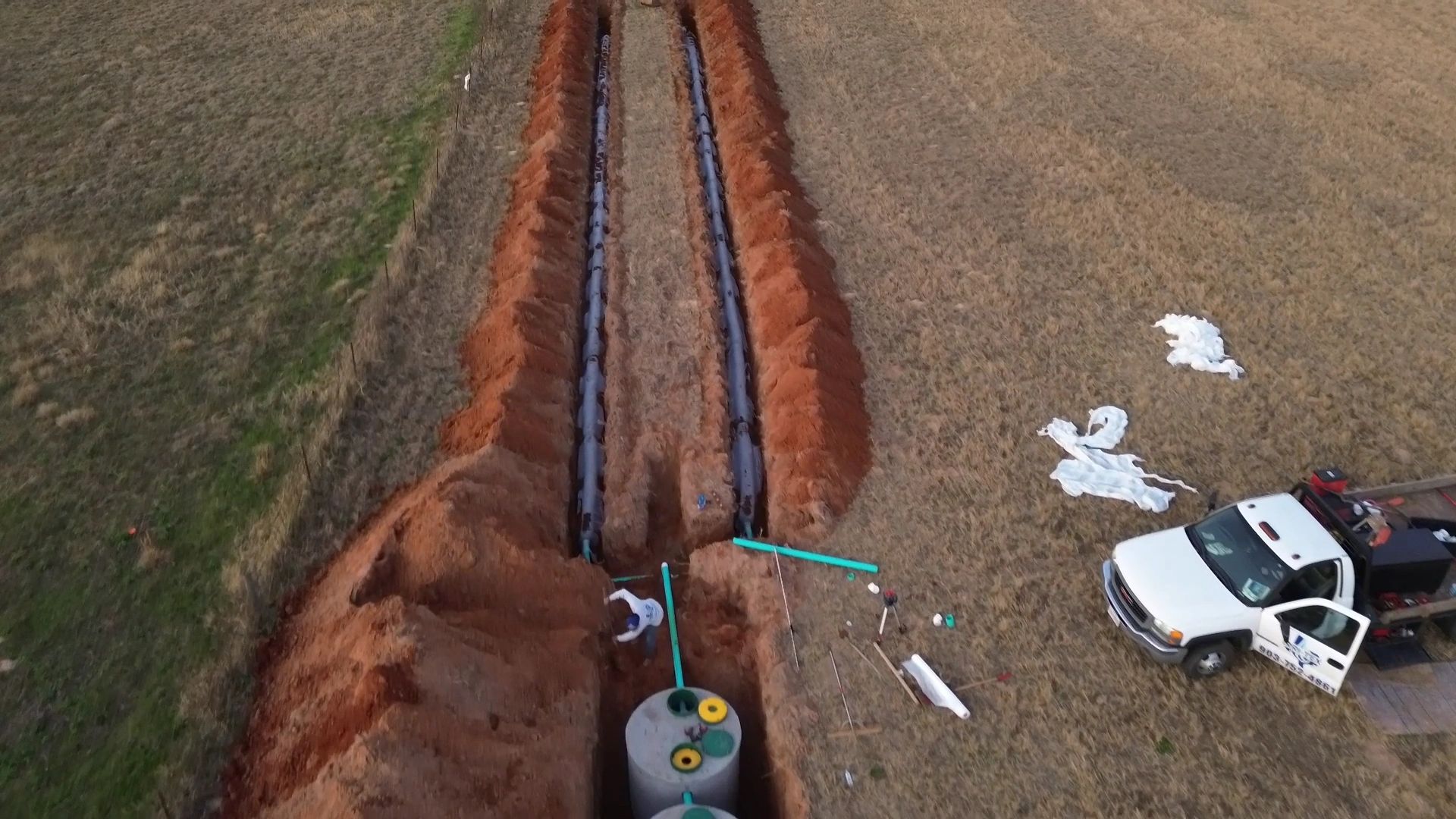
When something changes in your septic system, the first question is usually simple: what is causing it? The answer may require more than a quick look at one component. Irri-Tex LLC offers septic system troubleshooting in Tyler and East Texas. Describe what you are seeing, hearing, or noticing, and start a conversation about the next appropriate assessment. Understanding the problem comes before choosing the repair.
Turn an unclear concern into useful information
Troubleshooting begins with a good description. A sound, an odor, a warning indicator, or a change in drainage can each prompt a call, but the timing and context help tell the story. Explain when the symptom started and whether it occurs all the time or only occasionally. Note whether the concern affects one area of the home, several fixtures, or something outside.
You do not need technical vocabulary to describe the problem accurately. Ordinary observations are often more useful than a confident guess about a component you cannot see. Say what changed, how frequently it happens, and what you have already done in response. If someone else previously assessed the system, share their written findings rather than relying on a shortened version of the conversation.
Similar symptoms can lead to different findings
A septic system works alongside the home's plumbing and the conditions around the property. A concern noticed at a sink does not automatically establish a tank failure. An unusual outdoor condition does not identify the affected component by itself. Troubleshooting should distinguish the symptom from the cause, then identify which questions require closer inspection or a different type of professional service.
This is why replacing a part based only on a description can leave important questions unanswered. A useful assessment explains how the observations connect to the suspected issue and what evidence supports the recommendation. Ask which conclusions are established and which remain provisional. Understanding that distinction helps you decide whether the next step should be repair, additional evaluation, or coordination with another specialist.
Build a timeline before your call
A short timeline can make a complicated concern easier to discuss. Record the first occurrence, any later changes, and the dates of recent work. Include repairs, tank service, electrical work, landscaping, or construction that might be relevant to the conversation. Mention unusual changes in household water use without assuming that they caused the problem. The purpose is to supply context for the assessment.
If the symptom is intermittent, note the pattern as accurately as you can. Describe what happened before and after each occurrence. Avoid repeatedly operating equipment or adding water solely to recreate a problem. Information gathered during ordinary use is enough to begin. If an unsafe condition exists, keep people away and explain the concern when arranging help rather than continuing an informal investigation.
Know which records can help the assessment
Existing records can reduce guesswork about how the system was intended to operate. Look for the system layout, equipment instructions, prior reports, and invoices from completed work. If you recently purchased the home, check the documents you received during the sale. Even incomplete records can provide useful dates, component names, or contacts to discuss during the initial call.
Keep records in their original form where possible. A photograph of an equipment label taken safely may be useful, while copying a model name from memory can introduce an error. Tell Irri-Tex LLC what information you have and ask what will be helpful for the next step. Do not remove covers, open electrical equipment, or access a tank to obtain information that is not safely visible.
Treat warning signs as a reason to seek assessment
Backups, persistent unusual odors, or wastewater at the surface deserve attention. Keep people and pets away from suspected contamination and describe the condition when you contact a professional. An alarm on a system with monitoring equipment also needs to be understood in the context of that equipment. Follow the supplied instructions and seek appropriate assistance rather than assuming that silencing an indicator resolves the cause.
The role of the homeowner is to report the concern and avoid unnecessary exposure, not to enter or dismantle the system. Septic tanks are hazardous confined spaces. Stay out of tanks and away from unsafe lids or openings. A troubleshooting discussion can begin with your observations and records; it does not require you to perform an underground inspection before asking for help.
Ask for findings you can understand
After an assessment, ask for the findings in clear language. What was evaluated? What explains the reported symptom? Is there a confirmed fault, or is more investigation needed? Which work is recommended now, and which questions remain outside the current scope? These questions turn a technical conversation into a decision you can make with a better understanding of the property.
If a repair is recommended, request a defined scope before approving it. If another professional service is needed, understand why and what information should be passed along. Troubleshooting and repair may be related, but they are not automatically the same service. A clearly described next step helps you compare recommendations and keep the project organized without assuming that every concern has already been resolved.
Track recurring concerns without guessing at the cause
Recurring issues can be frustrating, especially when the system seems normal between episodes. Keep a simple record that includes dates, symptoms, and any work completed. A consistent record is more useful than repeatedly changing several things at once and losing track of what happened. Share whether the new occurrence is identical to earlier ones or includes a different sign.
Do not treat a temporary improvement as proof of a particular diagnosis. It may be one useful observation among several. Likewise, a previous repair does not mean every future symptom comes from the same component. The aim is to provide enough context for a focused assessment while remaining open to what the findings actually show. Good documentation supports that process over time.
Use the outcome to organize future care
Once the concern has been assessed, keep the findings with the property's septic records. Ask which instructions apply to your particular system and whether there are follow-up steps. Record any completed work separately from recommendations that remain open. That separation prevents an estimate or a suggestion from being mistaken later for a repair that was actually performed.
Routine care and responsible use remain part of ownership, but the requirements depend on the system. Keep the operating information available and arrange appropriate professional service as advised for your installation. When planning later work around the yard, consult the system layout first. A troubleshooting visit can be a useful opportunity to improve your records and make future conversations more straightforward.
Start with a conversation about what changed
Contact Irri-Tex LLC at (903) 752-4861 to discuss septic system troubleshooting in Tyler and East Texas. Have the property location, a brief symptom description, and any relevant service history ready. Explain any immediate safety concern at the start of the conversation and confirm the appropriate next step directly.
You do not need to arrive with a diagnosis. A careful description and the records you already have are a practical starting point. From there, the goal is to understand the concern, identify what needs evaluation, and establish a clear path toward an informed decision about your septic system.
Septic Troubleshooting: your questions answered
Is septic troubleshooting the same as a repair?
Troubleshooting focuses on understanding a concern and identifying an appropriate next step. Repair is a separate defined scope of work. Ask which activities are included when arranging a visit and how any recommended work will be discussed.
What if the symptom only happens occasionally?
Keep a short timeline with dates, observations, and relevant changes or previous work. Intermittent behavior is still useful information. Avoid trying to force the problem to recur or accessing equipment unsafely to investigate it.
Can you tell what is wrong from a photograph?
A photograph may help explain a visible condition, but it cannot establish the condition of every underground component. Share safe observations and existing records, then discuss what professional assessment is appropriate for your situation.
Does a septic odor always mean I need a new tank?
No. Odor can have more than one cause, so it does not establish that a tank needs replacement. Describe where the smell occurs, when it started, and any other symptoms. An assessment is needed to identify the cause and discuss the appropriate response.
What should I tell a septic professional about recurring problems?
Describe the symptom, how often it occurs, recent rainfall, changes in household use, and any previous service. Note whether several fixtures are affected or just one. A clear timeline is more useful than assuming that every recurring concern has the same cause.
Let’s talk about your property.
Contact Irri-Tex LLC at 903-752-4861 to discuss septic troubleshooting in Tyler and East Texas. Share your location, what you’re seeing, and what you’d like to accomplish.
Start a project conversation