
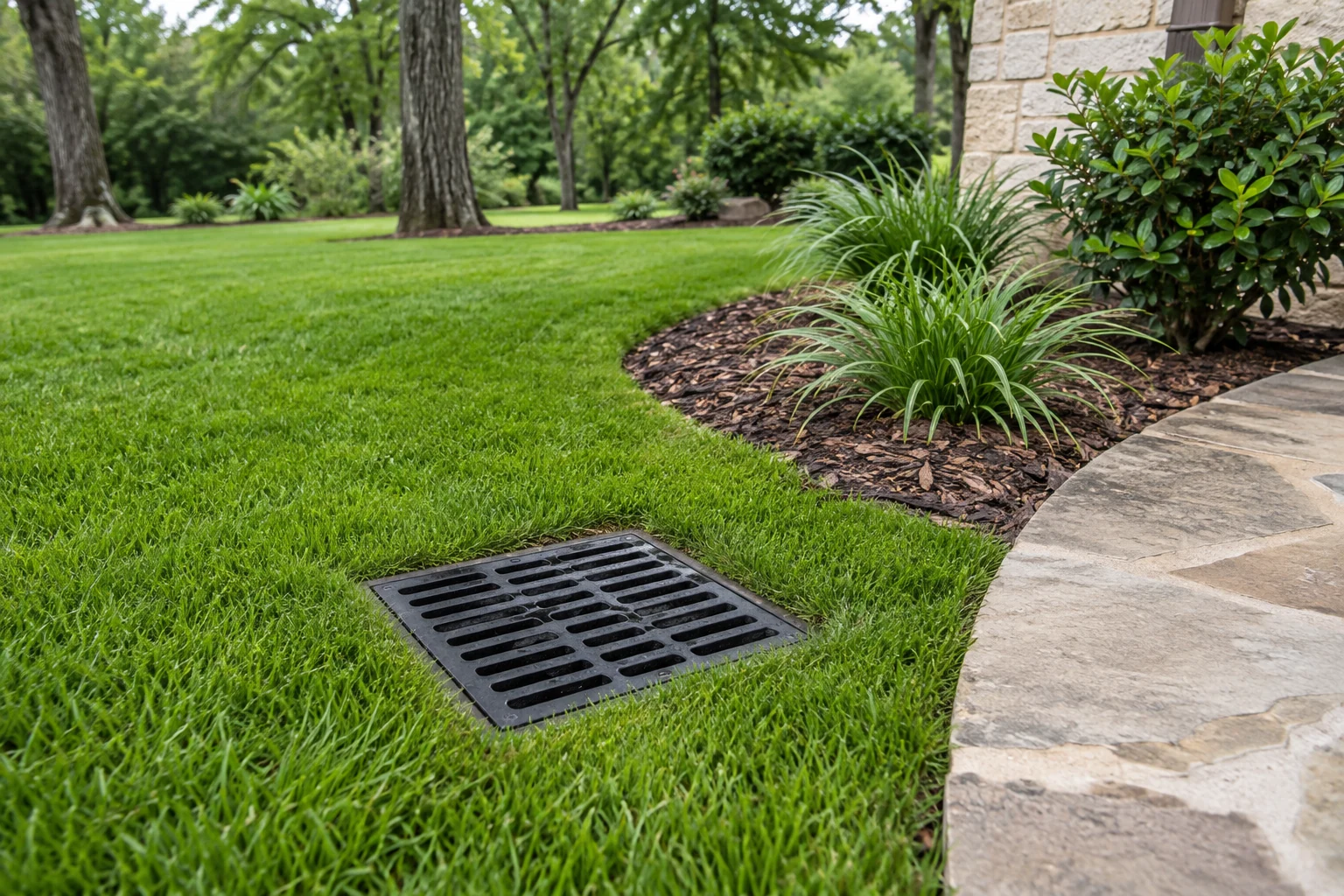
A yard should be a place you can enjoy, not a place you avoid after rain. If water collects beside the patio, turns a walkway muddy, or leaves part of the lawn consistently soggy, start with a closer look at where that water comes from. Irri-Tex LLC offers yard drainage solutions in Tyler and East Texas. The right conversation begins with your property, your observations, and the areas you want to use comfortably again.
Start with the source of the water
Standing water describes a symptom, but it does not identify the cause. Rain falling directly onto the lawn behaves differently from water concentrated by a roof, a driveway, or an uphill area. A shallow depression may collect runoff from several directions. A garden bed may hold moisture because its soil drains slowly. A leaking sprinkler line can make a drainage problem appear even when there has been little rain.
Before choosing a drain, describe when the area gets wet, how long it stays wet, and whether the problem changes when your irrigation system is off. Photos taken during ordinary rain can be especially useful. The goal is to understand the path of the water before deciding how to change it.
Match the solution to the way your yard drains
Yard drainage is not one product installed the same way on every property. Surface drains collect water at selected low points. A French drain is designed around water entering a gravel-filled trench and, where included, a perforated pipe. Surface shaping can also influence the direction that runoff travels. Some properties need one approach; others need a coordinated combination.
Choosing among these options means considering available fall, soil conditions, landscaping, access, and the proposed discharge point. A drain that looks suitable at the wet spot may be impractical once the full route is considered. Discuss both the visible collection point and the less visible connections that make the system work. Each part should have a clear purpose in the overall plan.
Give patios, paths, and lawn areas a practical plan
Outdoor spaces often reveal drainage trouble in different ways. Mud around a gate can make an everyday route difficult to use. Water at the edge of a patio can leave furniture and walking areas unpleasant after a storm. A low lawn area may remain too soft for mowing long after the surrounding grass has dried. Those differences matter when describing the result you want.
Identify your priorities before the visit. You may want to improve access to a side yard, reduce recurring puddles near a walkway, or understand why an established planting bed remains saturated. A useful drainage proposal should connect the proposed work to those specific concerns and explain the limitations of the approach, including conditions that may still produce temporary standing water.
Plan the outlet before the trench
Collecting water is only part of the job. It also needs a suitable place to go. The route from inlet to outlet affects pipe placement, excavation, and the overall feasibility of the drainage design. Discharging water into another wet area can simply move the problem. An outlet blocked by vegetation, sediment, or a high downstream water level can also limit performance.
Ask where the collected water will discharge and what makes that location appropriate. Property boundaries, existing drainage features, local requirements, and neighboring land all deserve attention. Avoid assuming that a street, roadside ditch, or nearby storm drain is automatically an approved connection. Resolve those details before installation so the plan reflects the real conditions on your property.
Consider irrigation and drainage together
Too much scheduled irrigation can contribute to wet soil, especially when watering continues after rain. Broken sprinkler components, mismatched coverage, or an unnoticed leak can create concentrated water in one area. A drainage installation should not become a substitute for correcting a water source that can be reduced or repaired.
Irri-Tex also lists sprinkler installation, repair, and tune-up services. If a wet area appears close to a sprinkler zone, explain that when you call. A useful evaluation distinguishes intentional watering from rain runoff and possible leaks. Bring any controller schedule information you have, along with notes about when the system operates. That background helps frame the conversation without assuming a diagnosis before the property is assessed.
Know what the proposed work includes
A written scope should make the project understandable. Review the areas being addressed, the type of collection system, the planned pipe route, the outlet, and how disturbed surfaces will be handled. Ask how existing irrigation, utilities, roots, and landscape features will be considered. If access is narrow or a hard surface must be crossed, discuss that early because it can affect the method and scope.
It is also worth clarifying what is outside the project. Lawn restoration, changes to gutters, unrelated grading, or repairs to an existing system may require separate decisions. A clear scope helps you compare proposals fairly and understand what you are approving. Price and timing should come from the actual property assessment, rather than a generic estimate for an unseen yard.
Keep drainage working after installation
Drainage systems need attention as the landscape changes. Leaves and grass clippings can gather around grates. Soil or mulch can migrate toward collection points. New planting beds, edging, sheds, or paving can alter surface flow and interfere with a previously open route. Knowing where the system is located makes future landscaping decisions easier.
Ask for practical maintenance guidance specific to the installed design. Keep accessible inlet and outlet areas visible, watch for changes after rain, and report recurring ponding rather than assuming it is normal. If you photograph the finished installation and keep the proposed route with your home records, you will have a useful reference for later work. Maintenance access should be part of the discussion from the beginning.
Talk through your Tyler drainage concerns
You do not need to choose a drain type before contacting Irri-Tex. Start with the problem you see and the space you want to improve. Describe the size of the affected area, nearby hard surfaces, recent landscape changes, and whether the wetness appears after rain, irrigation, or both. These observations are more useful than guessing at the cause.
For yard drainage in Tyler or an East Texas property, call Irri-Tex LLC at (903) 752-4861. Ask about service availability for your location and arrange the next step for your project. A property-specific discussion can help you decide whether surface collection, a French drain, an irrigation correction, or another approach deserves closer evaluation.
Yard Drainage: your questions answered
Does every wet yard need a French drain?
No. The source and behavior of the water matter. A surface collection system may suit visible runoff, while an irrigation repair may address a leak. A French drain is one option to evaluate, not a universal answer to every puddle.
What should I photograph before a drainage visit?
Photograph the affected area, nearby downspouts, paths that water follows, and the area after the rain has stopped. Note the approximate timing. Take pictures from a safe location and avoid entering moving water or approaching electrical equipment in wet conditions.
Can a yard drainage system prevent every flood?
No system should be presented as a guarantee against all flooding. Performance depends on the design, rainfall, downstream conditions, maintenance, and the surrounding property. Discuss the intended scope and limitations before approving work.
Can I request help if I am unsure what is causing the water?
Yes. Explain what you observe and when it happens. Irri-Tex lists drainage and irrigation services, so the initial conversation can include both runoff concerns and sprinkler-related symptoms without assuming which service is needed.
Who should I call about standing water in my Tyler yard?
Irri-Tex offers yard drainage and irrigation services in Tyler and East Texas. Describe where the water collects, when it appears, and how long it remains. Those observations help establish whether to discuss runoff collection, an irrigation concern, or another site condition.
What affects the cost of yard drainage work?
The collection area, route, outlet, excavation access, surface crossings, and restoration all influence the scope. Ask how the proposal addresses the cause of the wet area and what work is excluded. A photograph alone may not show the full route or site constraints.
Let’s talk about your property.
Contact Irri-Tex LLC at 903-752-4861 to discuss yard drainage in Tyler and East Texas. Share your location, what you’re seeing, and what you’d like to accomplish.
Start a project conversation